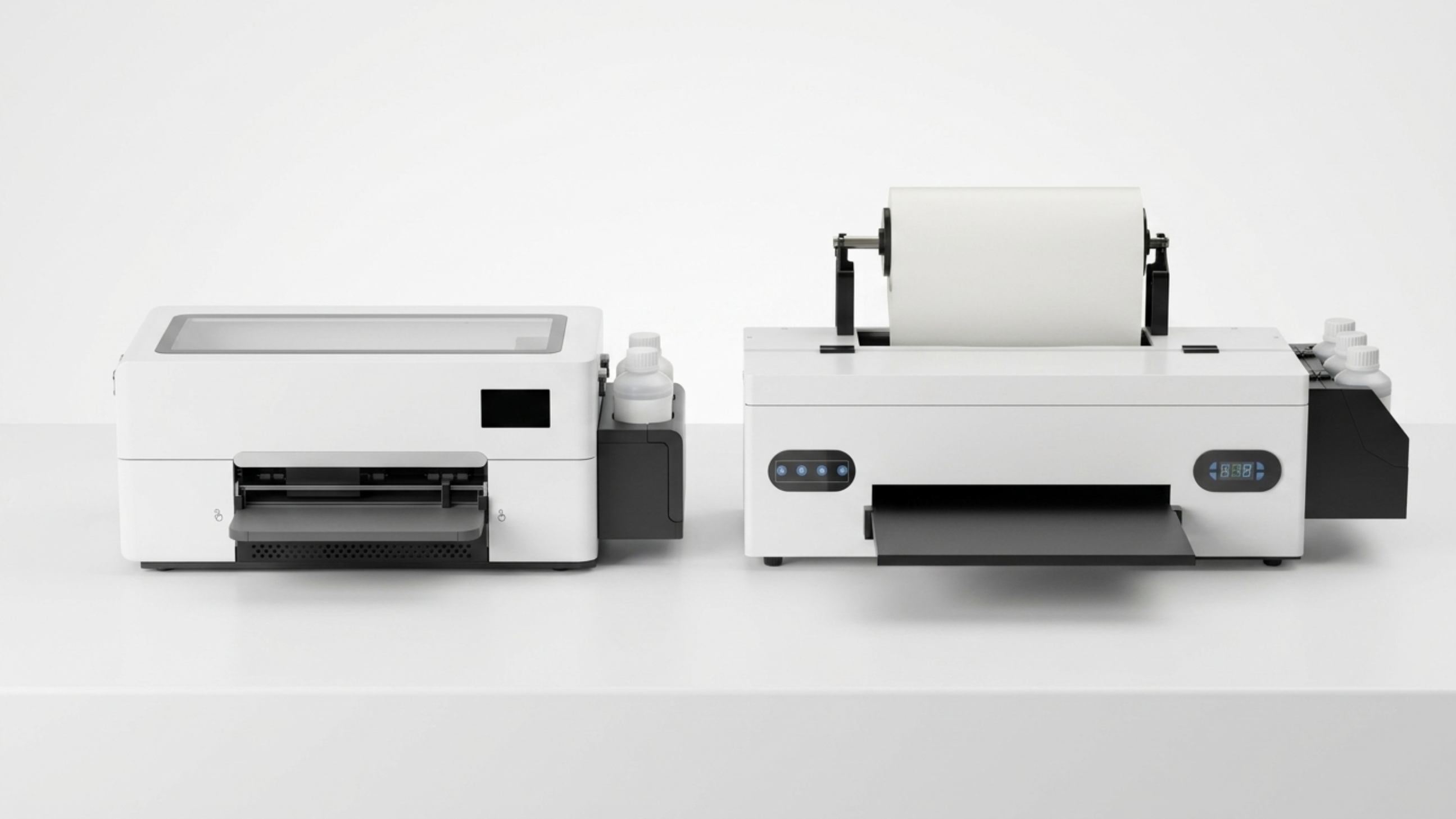
If you're shopping for a DTF printer, you'll hit this question fast: single head or multi head? The manufacturers all say the same thing, more heads means more speed. That's true, but it's not the whole picture, and it's not really the question that matters for most small shops.
What the head count actually changes
A single-head printer runs the white ink layer, then goes back over the same area for color. Two passes, one head. A multi-head machine dedicates a head to white and another to color, so both go down closer to the same pass. That's where the speed difference comes from.
What doesn't get talked about as much is the maintenance side. White DTF ink settles fast, so every head needs regular attention to stay clear. One head is one thing to keep an eye on. Two or four heads means two or four things that can clog, and cleaning cycles burn ink on every head, not just the one acting up. The upkeep scales with the hardware just as much as the output does.
The real question isn't speed, it's your order pattern
A multi-head printer earns its keep when you're running consistent volume, day after day. If most of your work is one-off orders, small custom runs, or you're still figuring out what your business actually needs, that extra speed sits unused a lot of the time while the extra maintenance doesn't.
Every printer company selling multi-head machines is going to tell you to size up. That's what they're selling. Nobody in that conversation is going to mention the option of not buying a printer at all yet.
The option nobody selling equipment will tell you about
If your volume doesn't clearly justify the jump, you don't have to guess and buy anyway. We can print gang sheets or single transfers for you while you figure out what your actual order pattern looks like, no equipment investment required. If you get to the point where owning it makes sense, you'll know it because you'll be printing that much. Until then, there's no rush.
#DTFprinting #DTFprinter #PrintShopEquipment #SmallBusinessPrinting