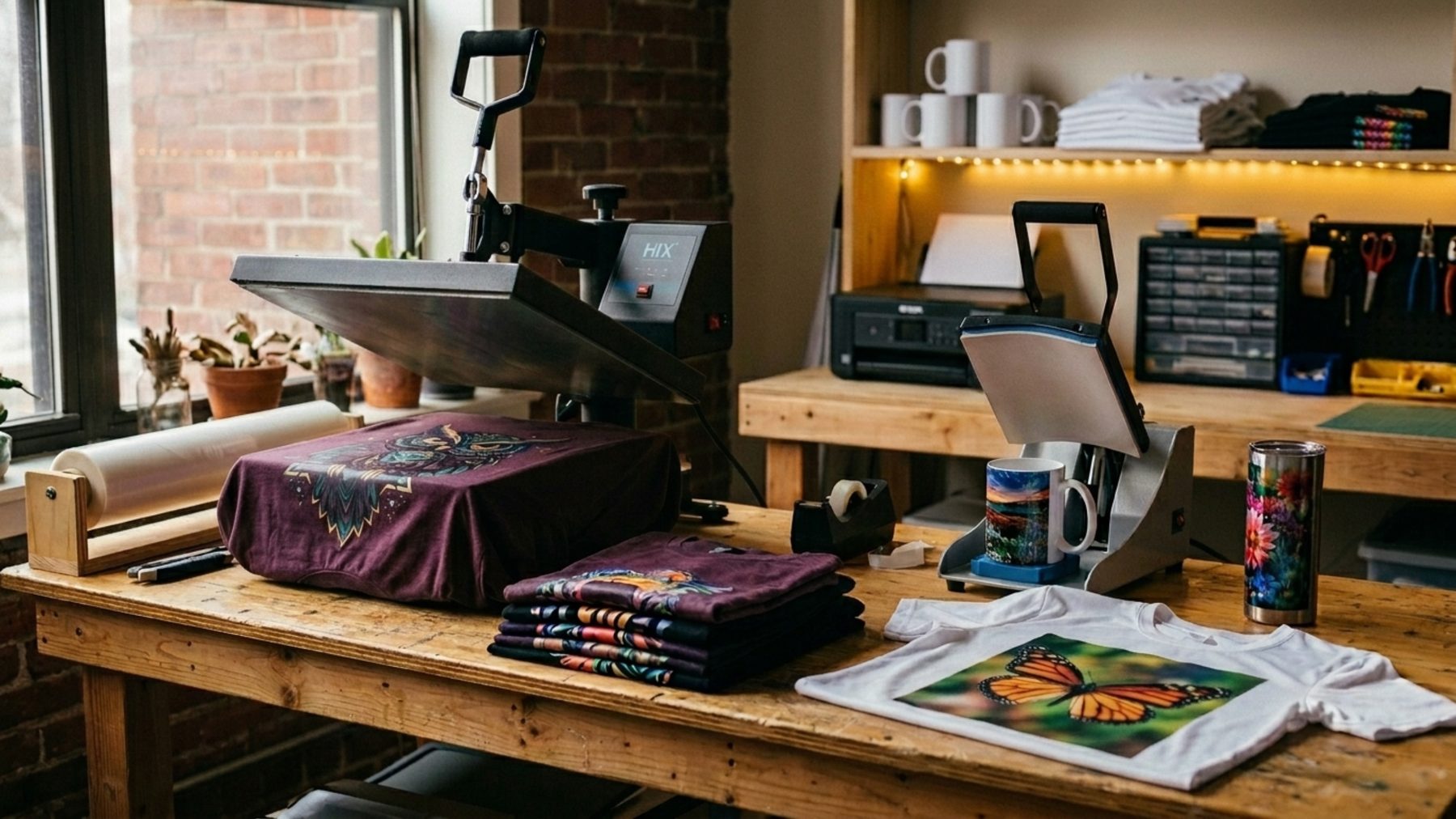
DTF works on almost any fabric or color, sublimation only works on light-colored polyester but the print blends into the fabric instead of sitting on top of it. If you're not sure which one your order needs, tell us what you're printing on when you request your quote and we'll tell you which method actually makes sense.
If you've been going back and forth on which print method to pick, here's the short version: DTF works on almost anything, sublimation only works on certain materials but looks and feels better when it does.
What DTF actually is
DTF stands for direct-to-film. The design gets printed onto a special film, then heat-pressed onto the shirt, hoodie, tote, whatever you're printing on. Since it's basically a sticker getting pressed on, it works on cotton, blends, dark fabrics, light fabrics, pretty much anything that can take heat.
That's the big advantage. If your order mixes fabric types or you're not sure what everyone's shirt is made of, DTF is the safe choice.
What sublimation actually is
Sublimation turns the ink into a gas that bonds directly into the fibers of the fabric, instead of sitting on top of it. That means you can't feel the design at all when you run your hand over it. No texture, no cracking or peeling over time.
The catch: it only works on polyester or poly-blend fabrics, and it only really shows up right on white or light-colored material. Try it on cotton or a dark shirt and it just won't take.
So which one do you actually want
Go DTF if: you're ordering cotton or a mix of fabrics, you want dark-colored shirts, or you're not 100% sure what everyone's wearing.
Go sublimation if: you're doing an all-over print, a photo-style design, or something on a light poly shirt or tumbler where you want it to feel like it's part of the fabric, not printed on it.
Not sure which one your order needs? Tell us what you're printing on and what the design looks like when you request your quote. We'll tell you which method actually makes sense for it, not just whichever's cheaper for us.